A holding pattern Budget offers little for contractors and small businesses
The Budget gave with one hand, took with the other, but ultimately backed away from addressing fundamental issues. Last week…
The Budget gave with one hand, took with the other, but ultimately backed away from addressing fundamental issues. Last week…
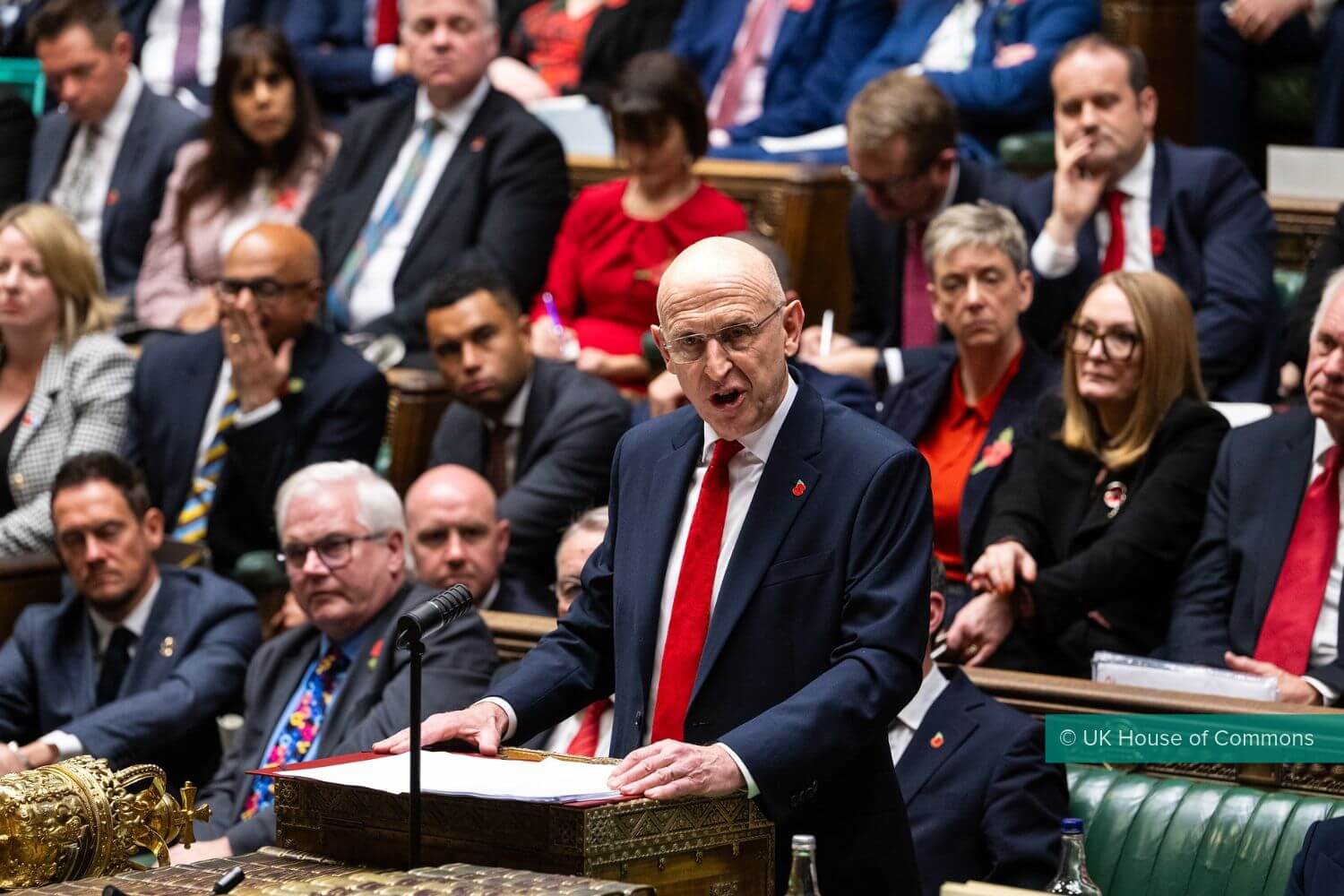
The Budget gave with one hand, took with the other, but ultimately backed away from addressing fundamental issues.
Last week Chancellor John Healey delivered the first Budget of the Burnham government, detailing the administration’s tax and spend priorities for the coming year.
As expected, it was a “no harm” budget for the most part. A £100 payment for 20 million households to help offset rising winter energy bills was the main headline, but the Budget delivered little of consequence for SMEs and contractors.
If anything, the Chancellor’s tinkering added to the complexity of a tax system in desperate need of simplification. There was some minor support for the sector but SMEs and the self-employed will be left feeling that a lot more could and should have been done.
With the price of diesel hitting record highs in October, and the cost of equipment and materials continuing to rise, small businesses and contractors were looking to the Chancellor to make good on his promise to create “breathing space” for business.
There was no rabbit-from-the-hat announcement, though there was some relief for those who use vehicles for work. The Chancellor announced a permanent increase in tax-free mileage rates for both the employed and self-employed, with rates set at 55p per mile for the first 10,000 miles and 35p per mile thereafter.
In addition, the Trading Allowance will increase from £1,000 to £3,000 from next April, which means that those who are starting out in self-employment can earn up to £3,000 tax-free. That might make it easier for people to test the waters of self-employment without going all in from day one, though the bigger aim here is probably to keep more low earners out of the grips of Making Tax Digital.
Either way, it’s a small measure and hardly likely to fulfil the Chancellor’s stated goal of enticing potential entrepreneurs who live abroad back to these shores!
Elsewhere, the Chancellor’s tinkering was generally unhelpful for SMEs and contractors. For example, he announced that the lifetime limit on gains eligible for Business Assets Disposal Relief (BADR) – which offers a reduced 18% rate of CGT on qualifying disposals – will be halved to £500,000.
This is a further erosion of a once valuable relief. For the decade up to 2020, Entrepreneurs’ Relief, the forerunner to BADR, allowed up to £10M of capital gains to be taxed at a lower CGT rate of 10%.
The new lifetime limit will apply to disposals made from 6 April 2027, so we’d advise those thinking of selling up to do so before then.
The Chancellor also announced the introduction of a new Founders’ Relief from next April. On paper it looks a positive move, with a 10% CGT rate on up to £10 million of lifetime gains for qualifying founders of high-growth, innovative companies.
Contractors and small business owners shouldn’t get too excited, however. A raft of conditions mean most of them won’t qualify.
There were other minor changes to capital allowances that, while ostensibly positive, won’t in practice affect many small businesses and contractors.
On personal taxation, the “breathing space” budget still ended up squeezing those with property and rental income, adding 2% to basic, higher and additional tax rates.
Critics will say that the government is again punishing those who choose to do the right thing by putting part of their income aside. Savings income can be particularly important for self-employed people trying to build up a buffer against quieter periods or to pay unexpected business expenses.
There was better news if your savings are in a cash ISA. The Chancellor announced that the annual subscription limit has been held at £20,000, scrapping a proposed cut to £12,000.
He also said the government will introduce new incentives for people to invest in stocks and shares ISAs for the first time. These will be developed with the industry.
Meanwhile, the prolonged freeze in personal allowances and income tax thresholds continues to further squeeze incomes through fiscal drag, with rising earnings bringing more income into higher tax bands. Could it be that the Chancellor will address this in a pre-election Budget?
There were some other changes to the administration and reporting of tax that hint at the government’s twin objectives of modernising the tax system and making sure people pay the right amount at the right time.
Self-assessment taxpayers who make payments on account will have to make more regular in-year payments towards their final tax bill from April 2029.
Businesses also have to set up a direct debit for VAT and PAYE from the same date.
More positively, taxpayers joining Making Tax Digital (MTD) for Income Tax in April 2027 will not receive penalty points for late submission of their first four quarterly updates for the tax year 2027-28. The government is also deferring the roll-out of MTD for Income Tax to several taxpayer groups until further notice.
From April 2028, employees will also be able to claim tax relief on non-reimbursed work expenses through PAYE without meeting the current £2,500 Income Tax Self Assessment threshold, although HMRC will require evidence for more claims.
The government is publishing a summary of responses to the consultation on company payments to participators that ran from March – June 2026. The new reporting requirements will not be implemented at this time.
They’ll also be modernising HMRC’s civil information and inspection powers by updating the rules for issuing information notices and revising the definition of computer records to reflect modern ways of storing and accessing information. In addition, from April 2028, new requirements will be introduced for taxpayers to correct tax returns and documents.
They say they’ll announce further measures to simplify the tax and customs system at a Tax Update in 2027. Small businesses and contractors that hoped for more of that in this Budget will have been left disappointed.
In a controversial move, HMRC is to be given the power to recover lower value tax debts directly from the bank accounts of those who can afford to pay but repeatedly fail to do so.
A clear message is that HMRC is getting tougher on tax collection, with the Revenue also recruiting another 670 compliance officers, pushing towards an objective of 5,500 new officers by the end of the decade.
The government hopes the Budget will create a little financial space for households and businesses until – fingers crossed – the world returns to a more stable state.
But small businesses and the self-employed will be hard pressed to find breathing room in a Budget that offered few concrete benefits beyond tax-free mileage rates for self-employed car use and minor changes to the Trading Allowance.
Against that, the value of BADR was eroded again and the Chancellor dipped his hand into the pockets of savers and those who rent out property. That could nibble away at the financial resilience of sole traders and freelance contractors.
Despite that, the Budget is likely to have minimal impact on most self-employed people and small businesses. This was an announcement that tinkered at the edges rather than committing to substantive reform. The big changes contractors wanted to see – especially the reform of a painfully complex tax system – have been kicked into the long grass for at least another year.